Detecting Potato Blight Weeks Early: What NDVI Drone Monitoring Reveals that RGB cannot
A 9-week field monitoring case using drone-acquired NDVI imagery, and what it means for trial design, early intervention and crop protection decision-making.
What the human eye misses
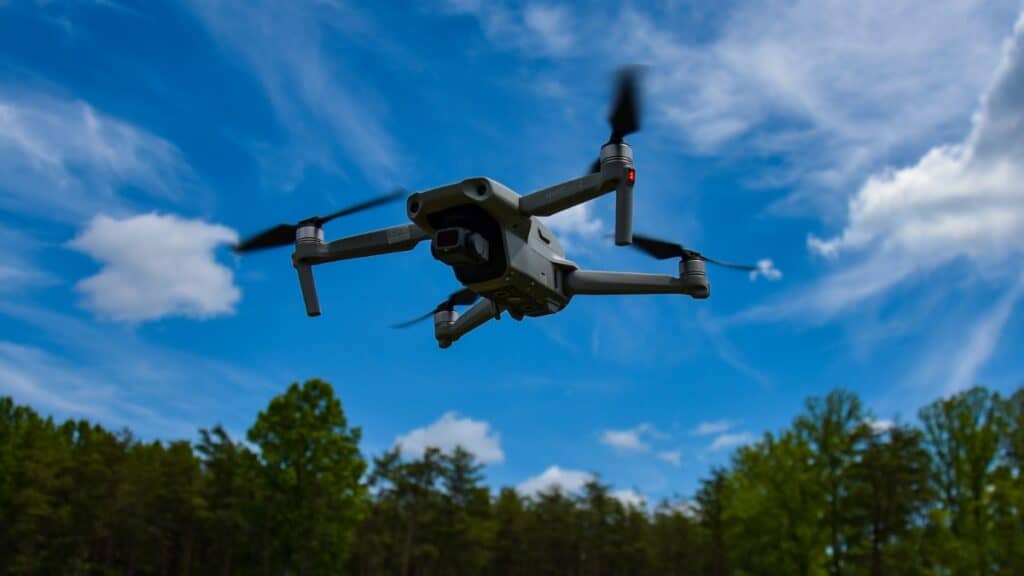
Standard RGB drone imagery captures what you would see from the air with your own eyes: color, texture, and visible damage. For many applications, that is sufficient. For early disease detection in agricultural field trials, it is not.
Vegetation indices such as NDVI (Normalized Difference Vegetation Index) work differently. Rather than looking at the combined wavelength, which gives you the same visible impression a normal RGB picture does, we look at the relationships between reflected light at different wavelengths, both visible and non-visible. NDVI looks at the relationship between reflected red light and near-infrared light. If there is low reflected light in the red band and high reflected light in the near-infrared, it can explain how effective photosynthesis is in the plant. This difference becomes measurable, mappable, and actionable in NDVI output, even when it is completely invisible in standard imagery.
The practical result is significant. NDVI can reveal physiological stress in crops before any visible symptom appears. For fungal diseases such as Phytophthora infestans, the pathogen responsible for potato blight, this detection window can open several weeks ahead of what RGB imagery or direct field observation would show.
NDVI can detect physiological stress in potato crops several weeks before symptoms become visible to the naked eye or in standard RGB imagery.
Nine weeks of Potato Blight development: What the data shows
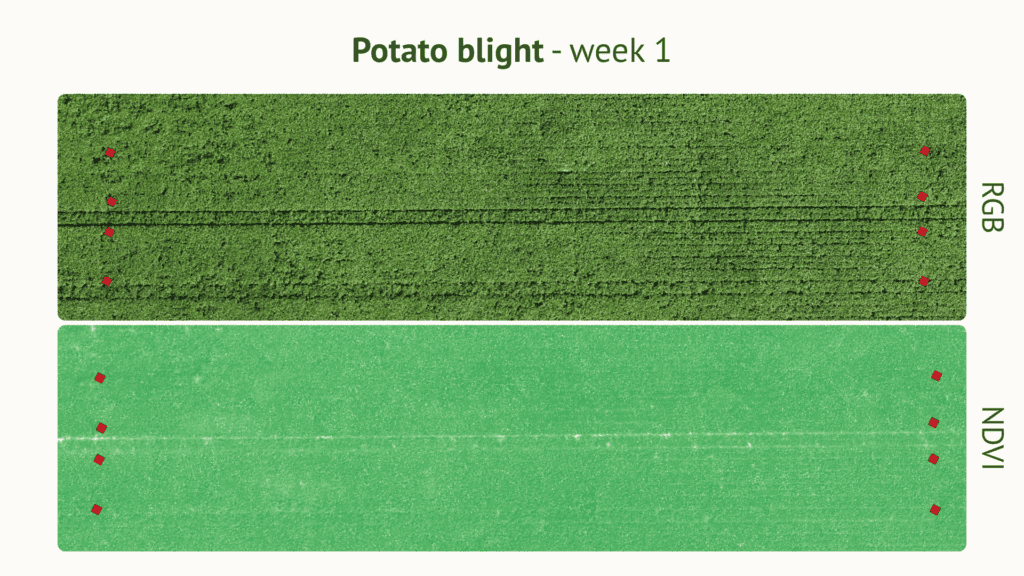
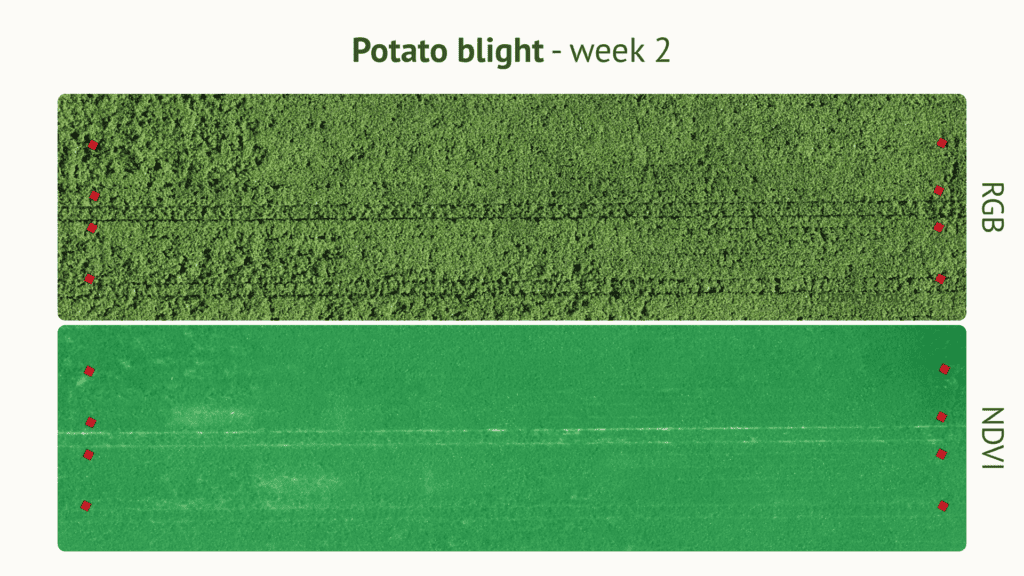
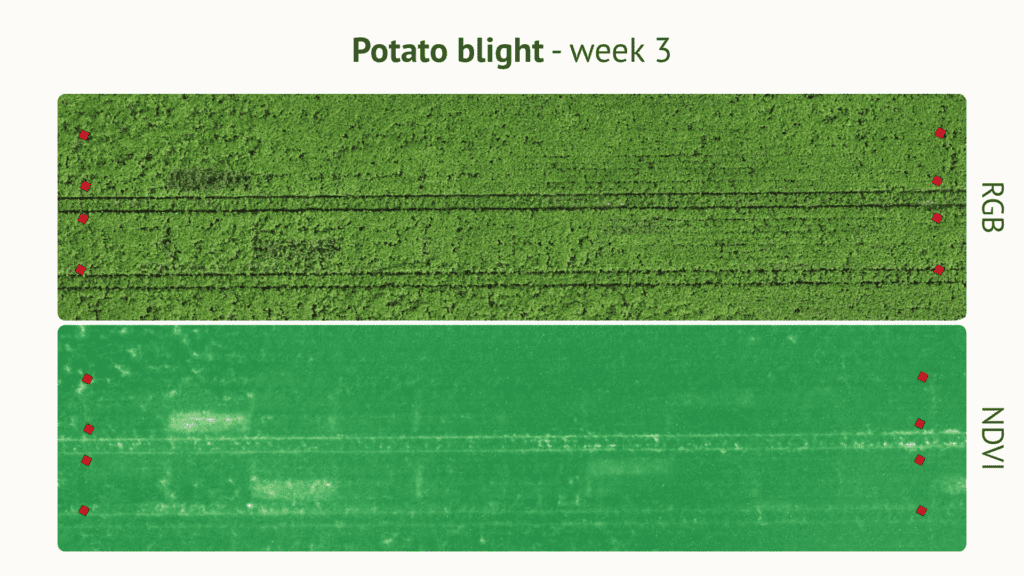
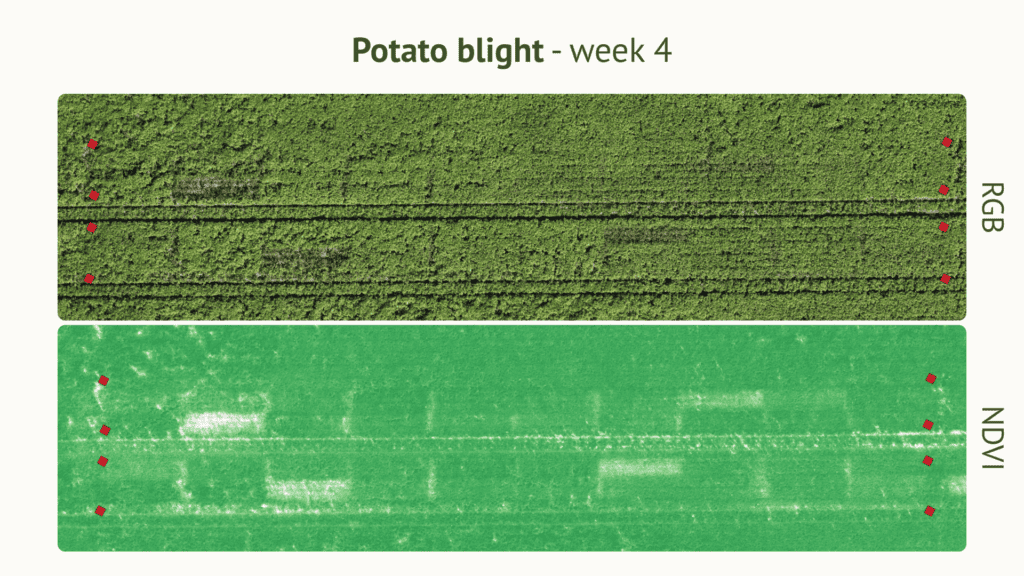
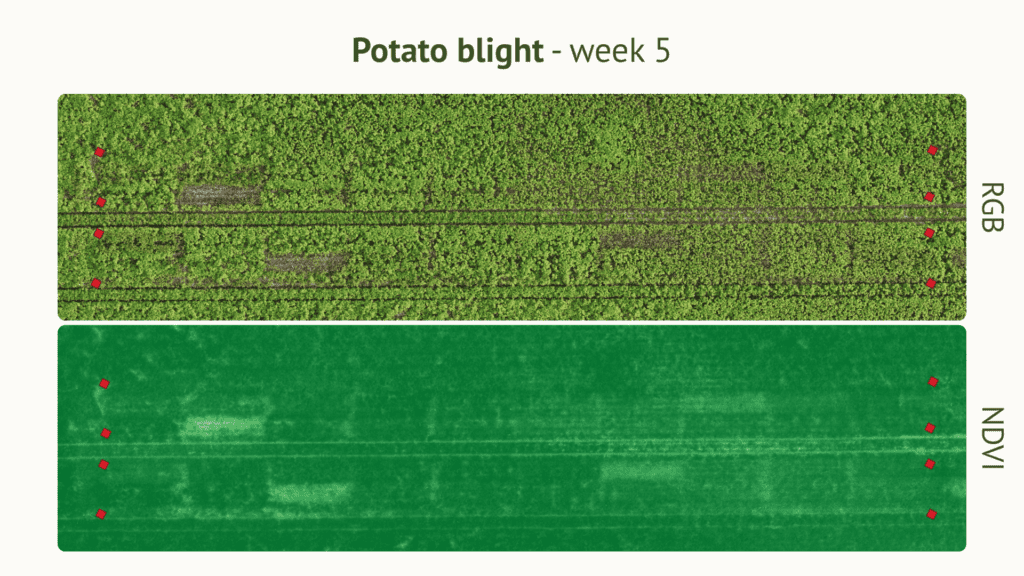
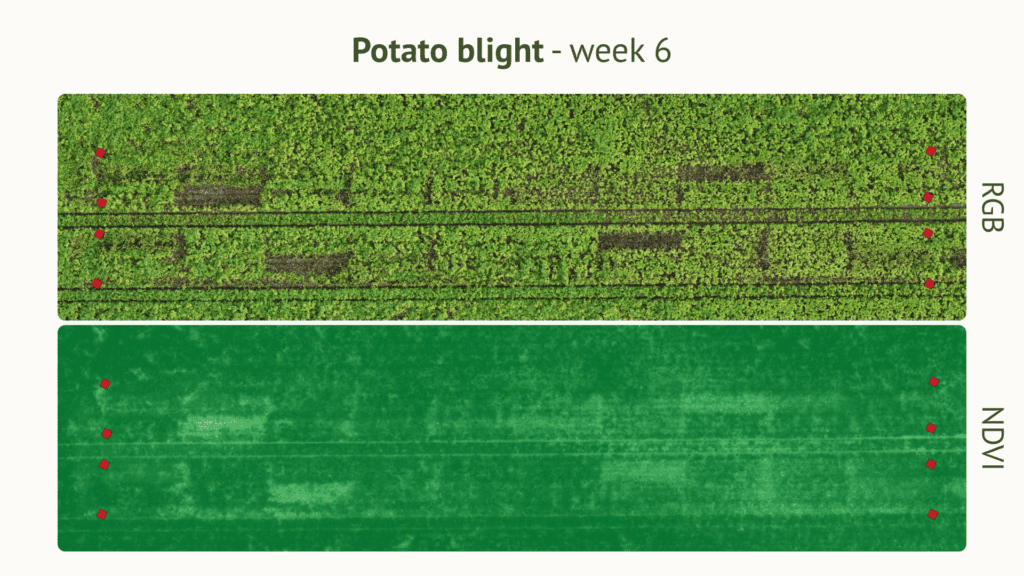
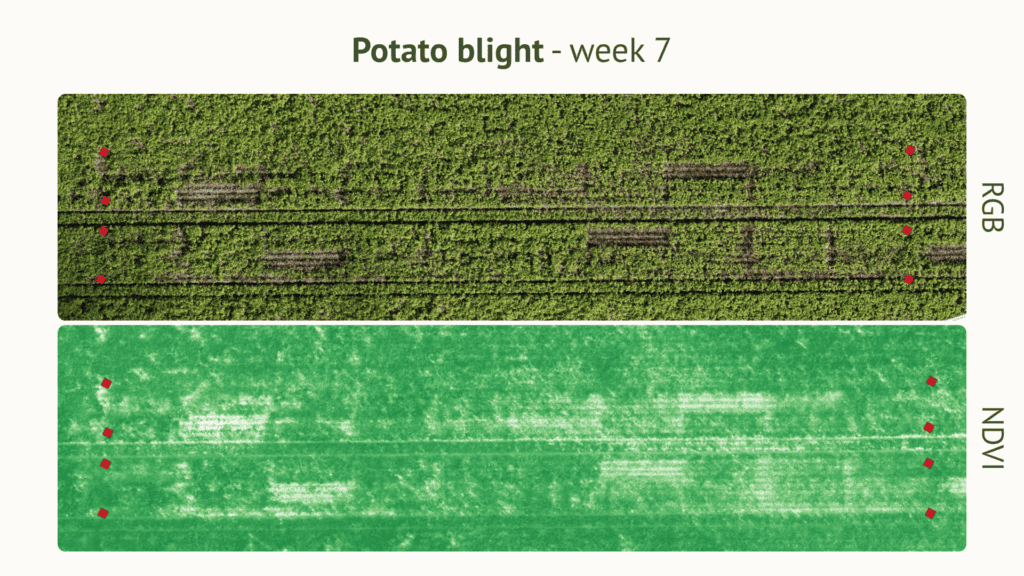
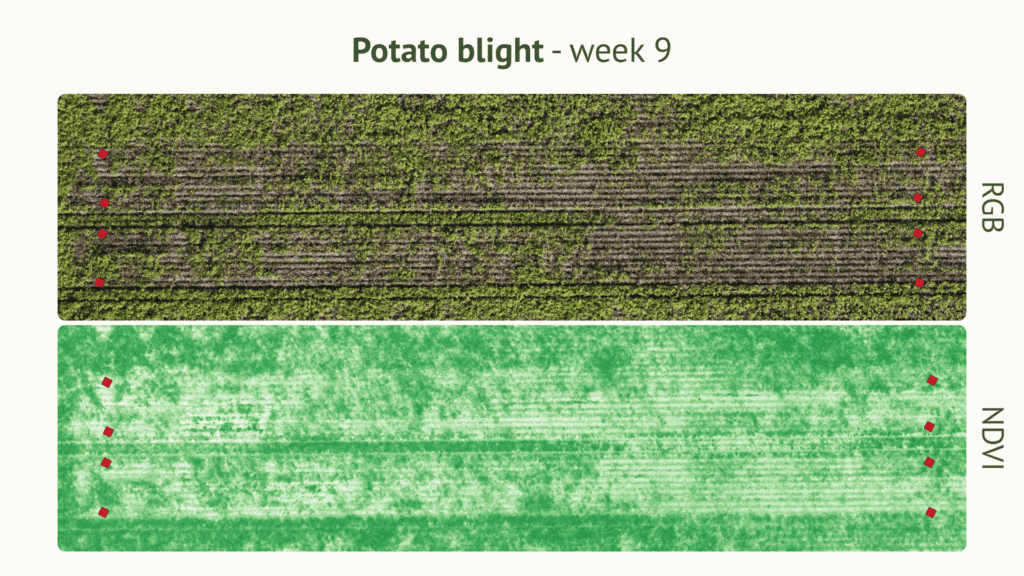
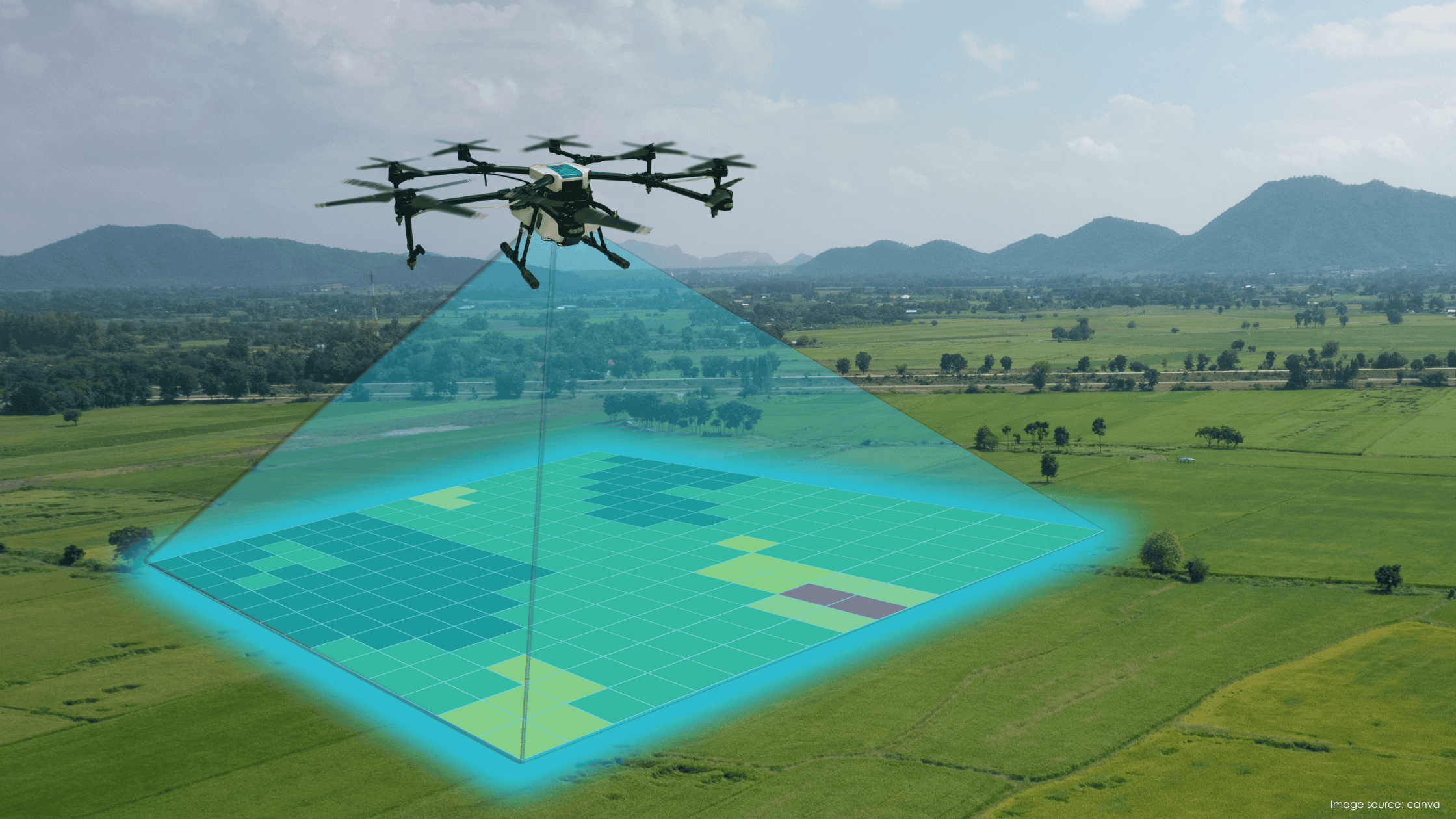
In this monitoring series, drone flights covered a potato trial field at regular intervals across nine weeks. Each flight captured both standard RGB and multispectral imagery processed to NDVI output. The two datasets were then aligned and compared week by week.
In the early weeks, RGB imagery showed a uniform, apparently healthy crop. The NDVI output told a different story. Early patches of reduced reflectance appeared in areas that showed no visible symptom at all. These patches aligned precisely with areas where blight symptoms became visually apparent one to two weeks later.
By the time RGB imagery clearly indicated disease pressure, the NDVI data had already mapped the infection pattern weeks earlier. The spatial distribution, the rate of spread, and the most affected areas were all visible in the NDVI record long before standard imagery caught up.
Why Early Detection Matters for Field Trials
For crop protection field trials, accurate early disease detection is not merely useful. It is structurally important.
Trial protocols under EPPO guidelines require consistent, well-documented assessment of disease development across trial sites. Delayed detection compresses the observable window of disease progression. It reduces the statistical resolution of efficacy assessments. In some cases, a critical treatment timing gets missed entirely.
NDVI-based drone monitoring addresses each of these problems directly. By establishing a baseline early in the season and tracking deviation from that baseline week by week, teams can detect disease onset at a spatial and temporal resolution that ground-based scouting cannot reliably achieve. This is especially true across larger trial areas or multi-site programs.
What This Means for Intervention Timing
Beyond the trial context, the same capability applies directly to commercial crop protection decisions. Early NDVI signals identify which parts of a field are under stress and how rapidly that stress is spreading. This allows growers and agronomists to assess whether intervention is warranted before economic damage has occurred. That is a meaningful operational advantage in any crop protection program.
The Role of NDVI Field Trial Monitoring in Modern Trial Programs
Integrating multispectral drone monitoring into field trial design is not yet standard practice across the industry. At Agrolab, it forms part of how we approach trial execution where early disease detection, spatial variability analysis, or longitudinal crop health monitoring adds value to the data package.
The 9-week potato blight monitoring series presented here was part of our ongoing Research & Development at Agrolab. The full dataset, including raw NDVI values, flight parameters, and week-by-week comparative imagery, is available for discussion with clients and collaborators working on crop protection trial programs in the EU North Zone.
To discuss how drone-based NDVI monitoring could support your trial program, contact Martin Gejl, Innovation Manager at Agrolab: mg@agrolab.dk
FAQ
NDVI (Normalized Difference Vegetation Index) measures the ratio of near-infrared to red light reflected from plant surfaces. Healthy vegetation reflects near-infrared light strongly, where stressed or diseased tissue does not. This makes physiological stress visible in NDVI output before any symptom appears in standard RGB imagery.
In Agrolab's nine-week monitoring program, NDVI imagery identified early stress patterns three to four weeks before symptoms became visible in RGB drone footage or direct field observation.
Yes. Drone-based multispectral monitoring can be integrated into field trial programs designed to EPPO and GEP standards. It supports consistent, documented assessment of disease development across trial sites and growing seasons, adding a spatial and temporal resolution that ground-based scouting alone cannot reliably achieve. Agrolab's drone technology is officially GEP-approved by the Danish GEP inspection unit and aligns with EPPO guideline PP1/333(1) — read more about our GEP-approved drone methodology here.
While this article focuses on potato blight (Phytophthora infestans), NDVI-based drone monitoring is applicable across a range of fungal and stress-related conditions in arable crops. Contact Agrolab to discuss monitoring programs for specific crops and pathogens.
Our drone monitoring program is led by Martin Gejl, Innovation Manager at Agrolab's R&D department. For specific equipment and sensor details relevant to your trial requirements, contact Martin directly at mg@agrolab.dk.
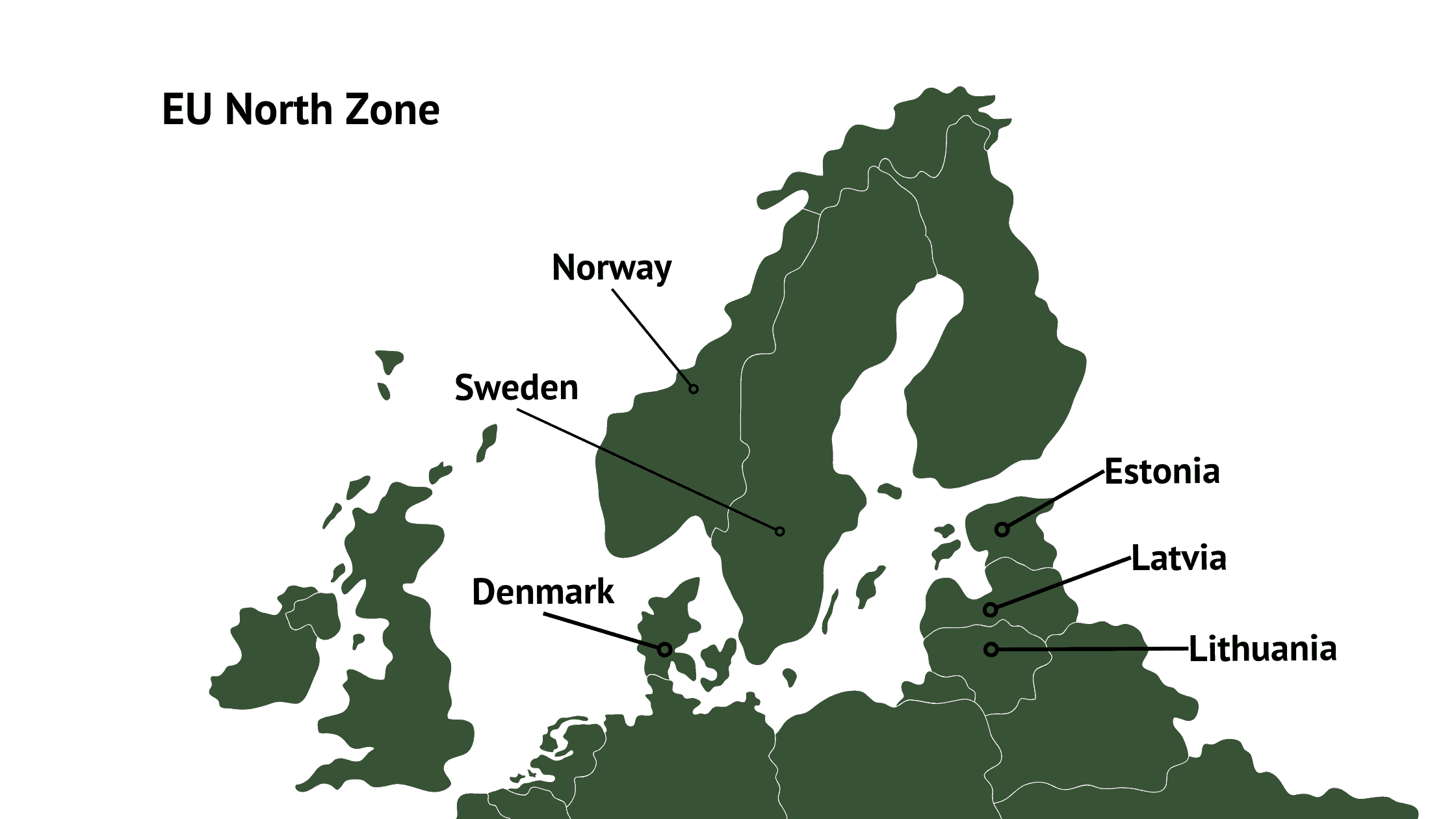
The North Zone's distinct growing conditions — shorter seasons, specific pest pressure windows, and variable weather across Denmark, Sweden, Finland, and the Baltic states — make early detection particularly valuable. Drone monitoring allows consistent tracking across geographically dispersed trial sites, supporting the multi-site, multi-season data requirements of North Zone registration under Regulation (EC) No 1107/2009.
NDVI is one of many vegetation indices and measurements drone technology can capture. The right output depends entirely on your trial objectives. Some examples of services we offer are canopy height, crop volume, green leaf area, and crop cover, but drone-based monitoring can be tailored to measure whatever your program requires. Contact Martin Gejl to discuss what makes sense for your specific trial design mg@agrolab.dk
Explore other posts
Northern Zone Efficacy Guidance 2025 (Version 10) – Key Updates
When applying for authorization of a plant protection product (PPP) in the EU Northern Zone, applicants must follow strict efficacy trial requirements. A newly updated Version 10.0 (2025) has now been released. Learn updated PPP trial requirements to streamline EU registration. This guidance defines […]
Agrolab's Drone Technology gets GEP-Approved for Field Trials
We are proud to announce that our innovative drone-based canopy height measurement method is now officially approved by the Danish GEP inspection unit. This technology aligns with EPPO guideline PP1/333(1), which supports the adoption of digital innovations for efficacy evaluations in plant protection...
About Agrolab
Agrolab A/S is the recommended research organization in the EU North Zone within field research and regulatory consulting.
Agrolab provides consultation and field trial services with the aim of assisting companies towards the registration of plant protection products in the agricultural and food production sector, specialized in Scandinavia and the Baltic states.